The theme of this year’s Economic Development Week is “Driving Gallup Forward: The Route to Trade & Talent.” For Gallup, the route to trade and talent is not paved in gold, but painted in vibrant colors, beaded in intricate patterns, inlaid with turquoise and coral, and woven with expressive designs. The arts have always been Gallup’s true economic engine, and, in order to continue driving Gallup forward, it is imperative that creative entrepreneurship and small business development be newly empowered.
To recap a principal aspect of Gallup’s trade history and sector: the arts generate tens of millions of dollars in local economic activity every year—double or triple that when you factor in how galleries, concerts, art markets, and cultural events generate spending on lodging, restaurants, and transportation, and feed the tourism industry. Arts and culture are known to be one of Gallup and McKinley County’s biggest exports; artwork produced in Gallup circulates through regional, national, and global markets, bringing outside dollars into the local economy.
The arts also play a key role in talent attraction and retention. Gallup’s dynamic creative landscape complements its natural beauty and offers a compelling value proposition for professionals and businesses looking to relocate or expand. The arts also catalyze development and growth, with creative placemaking and place keeping being nationally recognized, effective strategies for neighborhood revitalization.
Yet, investment has been lagging. The City of Gallup does not have an Arts & Culture Department, for example. McKinley County is lacking a proper art museum.
Cue gallupARTS: over the last decade, gallupARTS has procured $1.2M in state, regional, and national funding (in addition to the $187K provided by local governments) to invest in the cultural life of Gallup and McKinley County and to provide direct business and career support services to artists. This year, through a grant from the newly established New Mexico Economic Development Department’s Creative Industries Division (an initiative for which gallupARTS took a lead advocacy role), the organization is piloting an innovative model for artist business training that several Albuquerque- and Santa Fe-based organizations are tracking. It’s called the Creative Entrepreneurship Cohort Program and the concept is to engage a small group of local artists with varying levels and kinds of career and business
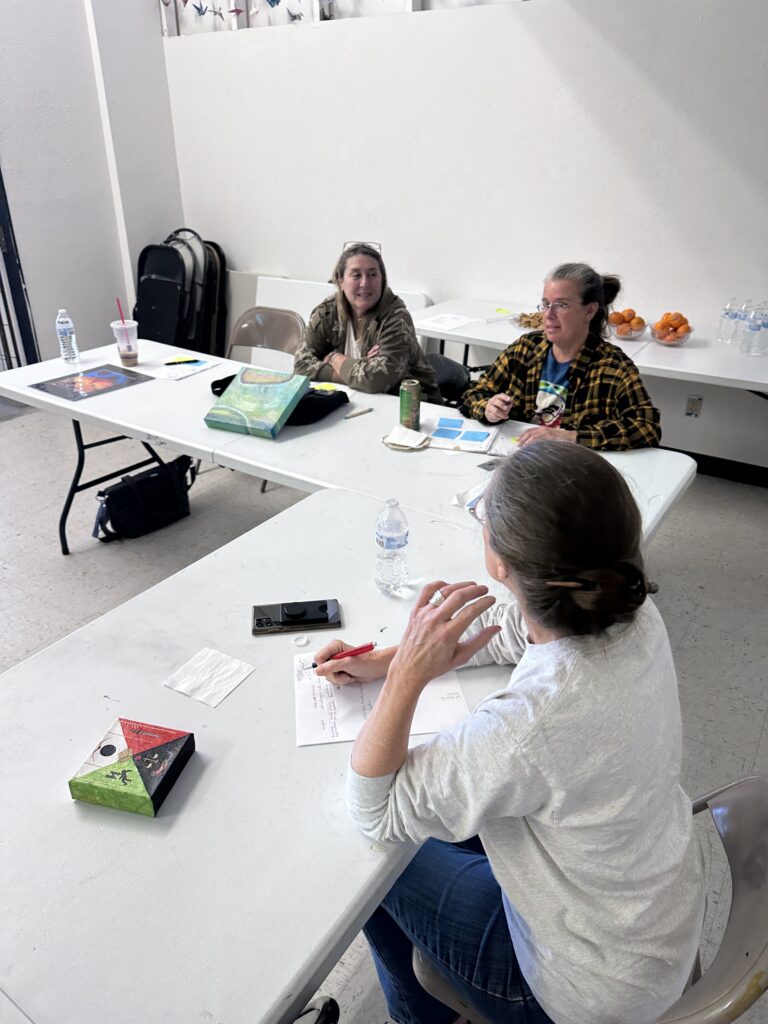 experience in co-designing a year-long program of targeted and tailored professional development and robust peer mentorship.
The program model is rooted in feedback from artists and creative entrepreneurs, who have told us they especially value multi-part professional development workshops for their opportunities for learning, implementation, and follow-up. gallupARTS has received repeated feedback about the need for a dedicated space to receive consistent, ongoing help. The Creative Entrepreneurship Cohort Program is designed to meet these needs and to provide meaningful and transformative support to local artists in starting or growing their businesses and/or advancing their careers.
The Program launched last March, with the cohort of artists deciding that the best place to start is not with business planning or skill development, but rather with career coaching. They have since met to work on setting goals within the context of real life opportunities and constraints. We are excited about the direction the Creative Entrepreneurship Cohort Program is taking and will report on its progress in March 2027.
The “Route to Trade & Talent” requires not only infrastructure, but imagination. By embracing the creative industries as a cornerstone of community development, we can chart a path that is both economically robust and culturally grounded.




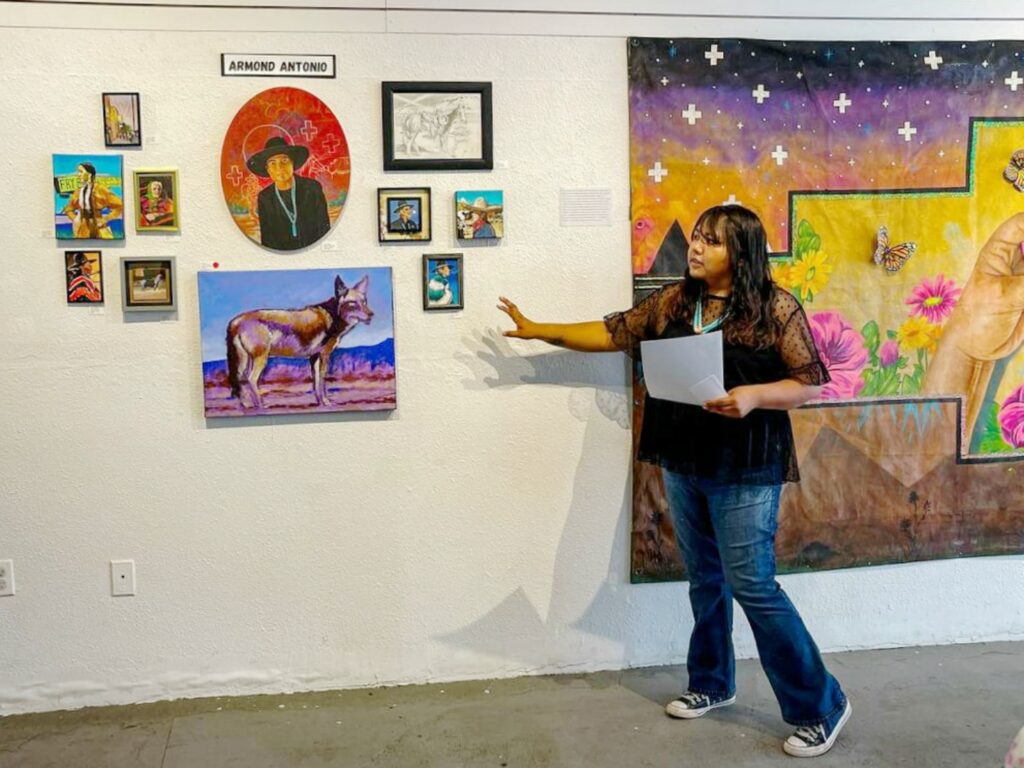
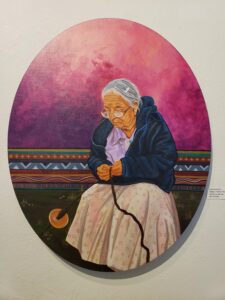 I wanted these portraits to serve as a reminder that behind works of art are individuals who have used their life stories, their creativity and talent to shape them and share with the world. That when we buy a painting, a silver piece of jewelry or drawing it’s not just the material object we are investing in but the legacy and livelihood of the artist who made it. It’s important for us as consumers to be conscious of what we are supporting.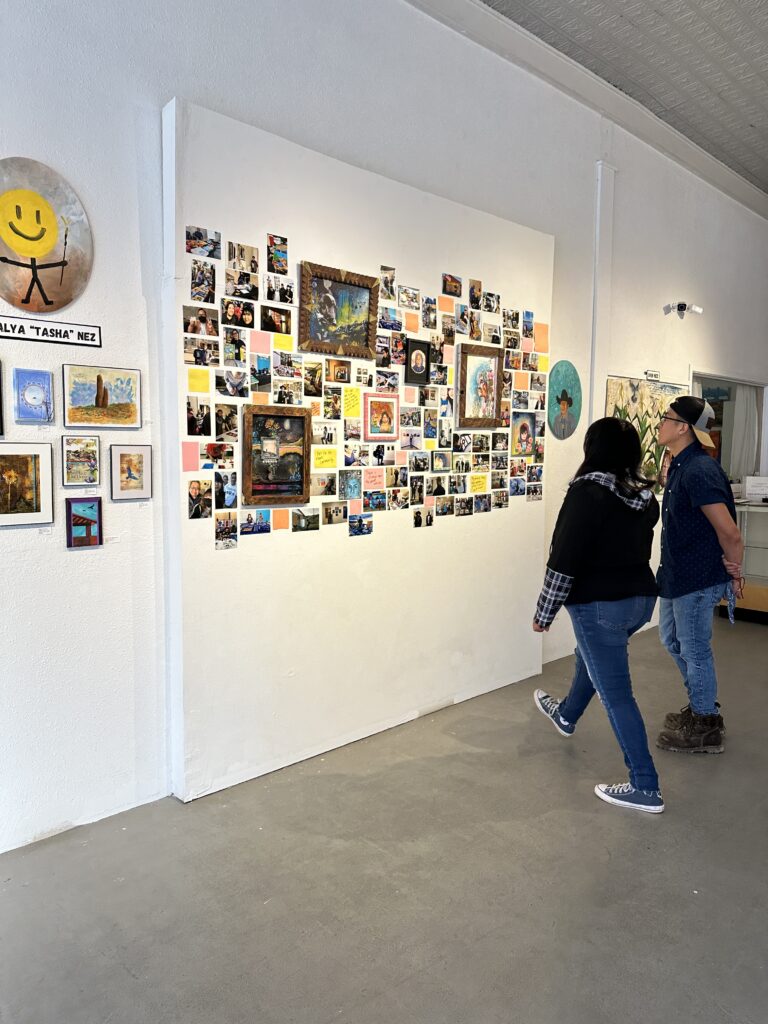
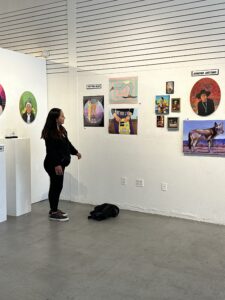 Peyton Alex is a self-taught graphic artist and second generation silversmith from Dilkon, Arizona, whose journey from traditional painting to digital art was catalyzed by the challenges of COVID-19 pandemic. Peyton creates vibrant digital artworks that highlight the dynamic spirit of female Native skaters. Inspired by her involvement with the Diné Skate Garden Project, Peyton’s work not only showcases the beauty and strength of Native culture but also provides representation that they felt was lacking during their own upbringing. Their pieces often feature traditional attire and elements from their upbringing, such as the mesas of their homeland and traditional aspects to inspire and empower the next generation. Peyton actively works with the Diné Skate Garden Project, teaching and providing skateboards and helmets to youth in remote locations on the reservation. THeir art and efforts aim to offer temporary escapes and foster a sense of freedom and resilience among the youth. Find Peyton on Instagram @_peekomeeko
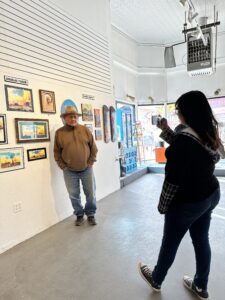 Douglas Yazzie is a watercolorist and painter from Chinle, Arizona. Douglas creates vibrant and detailed paintings inspired by the landscape, culture and history of his hometown. His watercolor paintings are widely collected and each one shows his impressive skill to manipulate watercolor pigments to create rich and mesmerizing landscape scenes. He can be found in many different art markets around Diné Bikéyah and surrounding cities. His wife is also an accomplished beadwork artist who often travels with him as he sells his artwork.